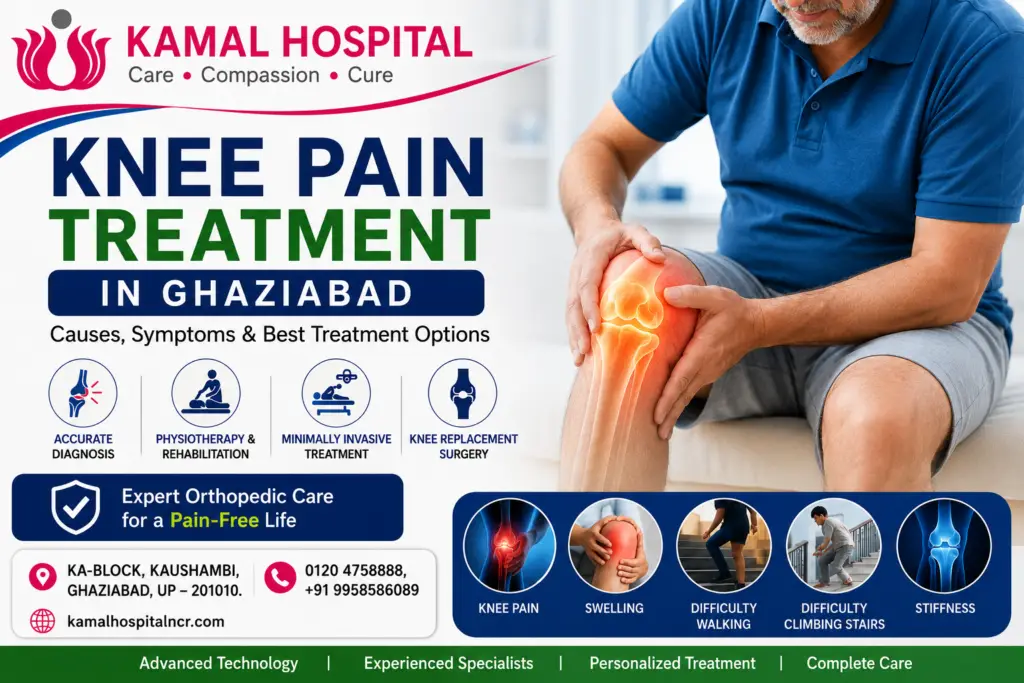
Knee pain is one of the most common orthopedic problems affecting people of all ages. Whether it is caused by aging, injury, arthritis, obesity, or an active lifestyle, knee pain can significantly impact your daily routine and quality of life. Simple activities such as walking, climbing stairs, sitting, standing, or exercising can become difficult when knee pain becomes severe.
In recent years, the number of patients seeking knee pain treatment in Ghaziabad has increased due to sedentary lifestyles, increased screen time, obesity, sports injuries, and age-related joint problems. While some cases of knee pain can be managed with rest and medication, chronic knee pain often requires expert orthopedic evaluation and advanced treatment.
At Kamal Hospital, our orthopedic specialists provide comprehensive diagnosis and personalized treatment plans to help patients regain mobility and live pain-free lives.
Understanding Knee Pain
The knee is one of the largest and most complex joints in the human body. It supports body weight and allows movement during walking, running, jumping, and other daily activities.
The knee joint consists of:
- Bones
- Cartilage
- Ligaments
- Tendons
- Muscles
- Synovial fluid
Damage or inflammation in any of these structures can lead to knee pain.
Common Causes of Knee Pain
1. Osteoarthritis
Osteoarthritis is the most common cause of knee pain among older adults.
It occurs when the cartilage cushioning the knee joint gradually wears away, causing:
- Pain
- Stiffness
- Swelling
- Reduced mobility
People above 50 years of age are more likely to develop osteoarthritis.
2. Rheumatoid Arthritis
Rheumatoid arthritis is an autoimmune condition in which the body’s immune system attacks healthy joint tissues.
Symptoms include:
- Joint pain
- Morning stiffness
- Swelling
- Fatigue
Early diagnosis is important to prevent permanent joint damage.
3. Sports Injuries
Athletes and physically active individuals often experience knee injuries due to:
- Sudden twisting movements
- Falls
- Direct impact
Common sports injuries include:
- ACL tear
- Meniscus tear
- Ligament injury
- Tendon injury
4. Obesity
Excess body weight puts additional pressure on the knee joints.
Studies show that overweight individuals have a significantly higher risk of developing knee osteoarthritis and chronic knee pain.
Weight management plays a crucial role in long-term knee health.
5. Tendinitis
Tendinitis refers to inflammation of the tendons around the knee.
It is commonly seen in:
- Runners
- Cyclists
- Jumping athletes
Symptoms include pain during movement and tenderness around the knee.
6. Bursitis
Small fluid-filled sacs called bursae help reduce friction around the knee.
Inflammation of these sacs can cause:
- Swelling
- Pain
- Redness
- Limited movement
7. Meniscus Tears
The meniscus acts as a shock absorber between the thigh bone and shin bone.
A torn meniscus can occur due to:
- Sudden twisting
- Sports injuries
- Age-related degeneration
Symptoms include locking, popping sounds, and pain during movement.
Symptoms of Knee Pain
The severity of symptoms varies depending on the underlying condition.
Common symptoms include:
- Persistent knee pain
- Swelling around the knee
- Stiffness
- Difficulty walking
- Reduced range of motion
- Clicking or popping sounds
- Instability while standing
- Difficulty climbing stairs
- Pain after prolonged sitting
If symptoms persist for more than a few weeks, medical evaluation is recommended.
When Should You Consult an Orthopedic Specialist?
Many people ignore knee pain until it becomes severe.
You should seek medical attention if you experience:
- Severe pain
- Sudden swelling
- Difficulty bearing weight
- Knee deformity
- Recurrent instability
- Persistent stiffness
- Limited movement
- Fever with joint pain
Early diagnosis can prevent complications and reduce the need for surgery.
Diagnosis of Knee Pain
Accurate diagnosis is essential for effective treatment.
At Kamal Hospital, orthopedic specialists may recommend:
Physical Examination
The doctor evaluates:
- Range of motion
- Swelling
- Joint stability
- Tenderness
X-Ray
Helps identify:
- Arthritis
- Bone damage
- Fractures
MRI Scan
Provides detailed images of:
- Ligaments
- Cartilage
- Tendons
- Meniscus
Blood Tests
Used to detect inflammatory conditions such as rheumatoid arthritis.
Best Treatment Options for Knee Pain
Treatment depends on the cause and severity of the condition.
1. Medications
Doctors may prescribe:
- Pain relievers
- Anti-inflammatory medicines
- Muscle relaxants
Medication provides temporary symptom relief while addressing inflammation.
2. Physiotherapy
Physiotherapy is one of the most effective non-surgical treatments for knee pain.
Benefits include:
- Improved flexibility
- Increased strength
- Better mobility
- Reduced pain
Regular physiotherapy can delay or even prevent surgery in some cases.
3. Lifestyle Modifications
Simple lifestyle changes can significantly improve knee health.
Recommended changes:
- Weight loss
- Regular exercise
- Healthy diet
- Proper footwear
- Avoiding prolonged sitting
These changes reduce stress on the knee joint.
4. Knee Braces and Supports
Orthopedic braces help:
- Stabilize the joint
- Reduce pain
- Improve mobility
They are especially useful for ligament injuries and arthritis patients.
5. Injections
Certain patients may benefit from injections such as:
Corticosteroid Injections
Help reduce inflammation and pain.
Hyaluronic Acid Injections
Improve lubrication within the joint.
These treatments can provide relief for months in selected patients.
6. Arthroscopic Knee Surgery
Arthroscopy is a minimally invasive procedure used to treat:
- Meniscus tears
- Ligament injuries
- Cartilage damage
Benefits include:
- Smaller incisions
- Faster recovery
- Less pain
For severe arthritis and advanced joint damage, knee replacement surgery may be the most effective option.
7. Knee Replacement Surgery
During the procedure:
- Damaged joint surfaces are removed
- Artificial implants are inserted
- Pain is significantly reduced
Modern knee replacement surgery offers excellent long-term outcomes.
How to Prevent Knee Pain
Prevention is always better than treatment.
Follow these tips:
Maintain Healthy Weight
Reducing excess weight lowers pressure on knee joints.
Stay Active
Low-impact activities such as:
- Walking
- Swimming
- Cycling
help maintain joint flexibility.
Strengthen Leg Muscles
Strong muscles support and protect the knee joint.
Use Proper Footwear
Supportive shoes reduce joint stress during walking and exercise.
Warm Up Before Exercise
Stretching and warm-up exercises help prevent injuries.
Recovery Tips for Knee Pain Patients
Recovery depends on proper treatment and rehabilitation.
Important tips include:
- Follow your doctor’s advice
- Attend physiotherapy sessions regularly
- Avoid overexertion
- Maintain healthy nutrition
- Stay hydrated
- Perform prescribed exercises
Consistency is key to successful recovery.
Why Choose Kamal Hospital for Knee Pain Treatment in Ghaziabad?
Kamal Hospital is committed to providing comprehensive orthopedic care with a patient-centered approach.
Our Advantages
✔ Experienced orthopedic specialists
✔ Advanced diagnostic facilities
✔ Personalized treatment plans
✔ Modern physiotherapy support
✔ Minimally invasive procedures
✔ Knee replacement expertise
✔ Affordable treatment options
✔ Focus on long-term recovery
Our goal is to help patients regain mobility, reduce pain, and return to their normal activities as quickly as possible.
Conclusion
Knee pain can affect people of all ages and significantly impact daily life. Ignoring symptoms may lead to worsening pain, reduced mobility, and long-term complications. Understanding the causes, recognizing early symptoms, and seeking timely medical care are essential for effective treatment.
Whether your knee pain is caused by arthritis, injury, obesity, or age-related wear and tear, modern orthopedic treatments can provide significant relief and restore function. At Kamal Hospital, our orthopedic team is dedicated to offering advanced knee pain treatment in Ghaziabad through accurate diagnosis, personalized care, and comprehensive rehabilitation programs.
If you are experiencing persistent knee pain, consult our orthopedic specialists today and take the first step toward a healthier, pain-free life.
Contact Kamal Hospital
Book Your Orthopedic Consultation Today
Get expert orthopedic treatment from experienced specialists at Kamal Hospital, Kaushambi, Ghaziabad.
Get in touch with us today to schedule an appointment or speak with our healthcare team.
📞 Call Us: 0120 4758888, +91 9958586089
📍 Address: KA-Block, Kaushambi, Ghaziabad, Uttar Pradesh – 201010
🕒 OPD Timings: Mon–Fri: 8 AM – 8 PM | Sat–Sun: 9 AM – 6 PM
🚑 Emergency Services Available 24/7
Frequently Asked Questions (FAQs)
Q1. What is the most common cause of knee pain?
Ans. Osteoarthritis is the most common cause of knee pain, especially in older adults.
Q2. Can knee pain be treated without surgery?
Ans. Yes. Many cases improve with medication, physiotherapy, weight management, and lifestyle modifications.
Q3. How do I know if I need knee replacement surgery?
Ans. If severe arthritis causes persistent pain and significantly affects daily activities despite conservative treatment, knee replacement may be recommended.
Q4. Is walking good for knee pain?
Ans. Moderate walking can improve joint mobility and strengthen muscles. However, severe pain should be evaluated by an orthopedic specialist.
Q5. How long does recovery take after knee treatment?
Ans. Recovery varies depending on the condition and treatment. Physiotherapy and rehabilitation play a crucial role in achieving the best outcomes.