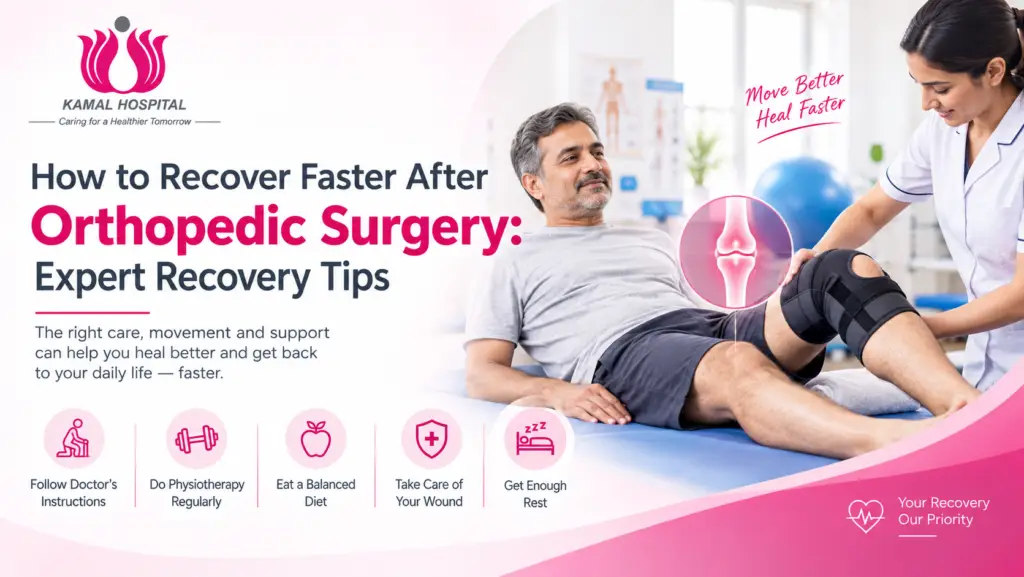
Orthopedic surgery can help restore movement, reduce pain, repair damaged bones or joints, and improve quality of life. However, surgery is only one part of the recovery process. What you do after surgery can have a major impact on how safely and effectively you regain strength and mobility.
Whether you have undergone knee replacement, hip replacement, fracture surgery, ligament repair, arthroscopy, or another orthopedic procedure, following your surgeon’s instructions, maintaining appropriate activity, taking prescribed medicines, eating well, and completing physiotherapy can support recovery.
Recovery time varies depending on the type of surgery, your overall health, age, the condition being treated, and how closely you follow your rehabilitation plan. For example, recovery after joint replacement can take several months, and the timeline is different for every patient.
At Kamal Hospital, Kaushambi, Ghaziabad, orthopedic care includes evaluation and treatment for various bone, joint, trauma, and musculoskeletal conditions. Here are practical recovery tips that can help you make your post-surgery journey smoother.
What Is Orthopedic Surgery?
Orthopedic surgery focuses on conditions affecting the bones, joints, muscles, ligaments, tendons, and other parts of the musculoskeletal system.
Common orthopedic procedures include:
- Knee replacement surgery
- Hip replacement surgery
- Fracture fixation
- Arthroscopy
- Ligament repair
- Sports injury surgery
- Shoulder surgery
- Spine-related procedures
- Joint reconstruction
- Trauma surgery
The recovery plan is different for every procedure. Therefore, patients should follow the specific instructions provided by their orthopedic surgeon rather than comparing their recovery with another person’s experience.
10 Expert Tips to Recover Faster After Orthopedic Surgery
1. Follow Your Orthopedic Surgeon‘s Instructions
One of the most important steps after surgery is following your surgeon’s instructions carefully.
Your orthopedic team may provide guidance regarding:
- Weight-bearing restrictions
- Walking and movement
- Wound care
- Medications
- Physiotherapy
- Use of crutches or a walker
- Sleeping positions
- Follow-up appointments
- Activities that should be avoided
Do not change your medication, exercise routine, or activity level without discussing it with your healthcare provider.
After joint replacement surgery, for example, following the prescribed rehabilitation plan and using the operated joint appropriately can support recovery.
2. Start Moving When It Is Safe
After orthopedic surgery, it can be tempting to remain in bed because of pain or discomfort. However, prolonged inactivity can contribute to muscle weakness, stiffness, and blood-clot risk.
Your healthcare team may encourage you to get out of bed and begin gentle movement as soon as it is medically safe.
Depending on your surgery, this may include:
- Sitting in a chair
- Short walks
- Gentle ankle movements
- Changing position regularly
- Using a walker or crutches
Early movement should never mean pushing through excessive pain. The goal is controlled and gradual activity according to your surgeon’s or physiotherapist’s instructions.
3. Do Your Physiotherapy Exercises Regularly
Physiotherapy is often an important part of orthopedic recovery.
A physiotherapist may design exercises to help improve:
- Joint movement
- Muscle strength
- Balance
- Flexibility
- Walking ability
- Functional independence
After joint replacement or other orthopedic procedures, rehabilitation exercises can help you gradually return to normal daily activities.
Consistency is more important than trying to do too much in a single session.
Do not add extra exercises simply because they seem easy. Some movements may place unnecessary stress on the healing joint or surgical area.
4. Manage Pain Properly
Some pain, soreness, or discomfort is expected after orthopedic surgery. Your doctor may prescribe pain-relieving medication to help control these symptoms.
Good pain management can make it easier to participate in physiotherapy and move safely.
Take medicines exactly as prescribed and inform your doctor if:
- Pain suddenly becomes severe
- Pain keeps increasing instead of improving
- Medication is not providing adequate relief
- You develop a new type of pain
Avoid taking additional painkillers or supplements without discussing them with your healthcare professional.
Effective pain control can support mobility and rehabilitation after surgery.
5. Take Care of Your Surgical Wound
Proper wound care is essential for reducing the risk of infection.
Follow your hospital’s instructions regarding:
- Dressing changes
- Keeping the wound clean
- Keeping the wound dry when instructed
- Bathing or showering
- Stitches or staples
- Follow-up examinations
Do not apply creams, oils, powders, or other products to the surgical wound unless your healthcare provider recommends them.
Contact your medical team if you notice increasing redness, swelling, worsening pain, unusual discharge, or other changes around the wound. These can be signs of infection that require medical assessment.
6. Eat a Nutritious, Balanced Diet
Your body needs adequate nutrition while recovering from surgery.
A balanced diet can provide nutrients needed for tissue repair, muscle maintenance, and overall recovery.
Include foods such as:
- Protein-rich foods
- Fresh vegetables
- Fruits
- Whole grains
- Pulses and legumes
- Dairy or suitable alternatives
- Adequate fluids
Protein is particularly important for maintaining and rebuilding muscle, while a varied diet provides vitamins and minerals needed for normal body functions.
If you have diabetes, kidney disease, or another condition requiring dietary restrictions, follow the diet recommended by your doctor or dietitian.
7. Control Swelling With the Right Measures
Swelling is common after many orthopedic procedures. Your doctor or physiotherapist may recommend measures such as elevation, appropriate activity modification, or other methods depending on the procedure.
After joint replacement surgery, for example, elevating the operated limb and temporarily reducing activity can help manage swelling.
However, sudden or severe swelling should not automatically be considered normal.
Especially after lower-limb surgery, seek medical advice if you develop new or worsening leg swelling, pain, warmth, or discoloration because these may be signs of a blood clot.
8. Use Walking Aids Correctly
Crutches, walkers, sticks, braces, or other support devices may be recommended after orthopedic surgery.
These devices can help you move safely while your muscles and joints regain strength.
Your physiotherapist can teach you:
- How to stand safely
- How to use a walker
- How to use crutches
- How much weight you can put on the operated leg
- How to use stairs safely
- When you may gradually reduce your dependence on the aid
Do not stop using a walking aid simply because you feel slightly better. Your doctor or physiotherapist should guide the transition.
9. Get Enough Rest and Sleep
Recovery does not mean exercising all day.
Your body needs adequate rest to recover from the physical stress of surgery. Fatigue is common after major surgery, and recovery can take time.
Try to maintain a healthy sleep routine and balance activity with rest.
A useful approach is:
Activity → Rest → Recovery → Gradual progression
If your pain or swelling increases significantly after activity, discuss your exercise level with your healthcare team.
10. Attend All Follow-Up Appointments
Follow-up appointments allow your orthopedic surgeon to monitor your recovery.
During these visits, your doctor may assess:
- Wound healing
- Pain and swelling
- Joint movement
- Muscle strength
- Walking ability
- X-rays or other investigations when needed
- Progress of rehabilitation
Your recovery plan may be adjusted based on your progress.
Even if you feel better, do not skip scheduled follow-ups unless your healthcare provider advises you to do so.
What Should You Avoid After Orthopedic Surgery?
Some activities may need to be avoided temporarily depending on your surgery.
These may include:
- Heavy lifting
- High-impact exercise
- Running
- Sudden twisting movements
- Excessive bending
- Driving before you are medically cleared
- Returning to sports too early
- Walking without recommended support
- Ignoring increasing pain or swelling
The exact restrictions depend on the procedure. For example, restrictions after knee replacement are different from those after fracture surgery or ligament repair.
Always follow your surgeon’s specific instructions.
How Long Does Orthopedic Surgery Recovery Take?
There is no single recovery timeline for every orthopedic patient.
Recovery can depend on:
- Type of surgery
- Severity of the original injury
- Age
- General health
- Muscle strength before surgery
- Presence of diabetes or other medical conditions
- Smoking status
- Nutrition
- Physiotherapy participation
- Following post-operative instructions
Some patients may begin walking soon after surgery, while others may need longer periods of protected movement.
For knee replacement, for example, recovery can take several months or longer, with the timeline varying between individuals.
The goal should not simply be to recover as quickly as possible. It is more important to recover safely and correctly.
Warning Signs You Should Not Ignore After Surgery
Contact your doctor or seek urgent medical care if you experience concerning symptoms such as:
- Severe or rapidly increasing pain
- Increasing redness around the wound
- Pus or unusual wound discharge
- Fever with other signs of infection
- Sudden or significant swelling
- New numbness or loss of sensation
- Severe calf pain or swelling
- Sudden chest pain
- Sudden difficulty breathing
- Unexplained deterioration in your condition
A blood clot in the leg can cause pain, swelling, warmth, or discoloration. If a clot travels to the lungs, it can cause chest pain and shortness of breath and requires urgent medical attention.
The Importance of Physiotherapy After Orthopedic Surgery
Physiotherapy can be an important component of orthopedic rehabilitation.
A structured rehabilitation programme can help patients gradually work toward:
Better mobility → Improved strength → Better balance → Greater independence → Return to daily activities
Your physiotherapist may progressively modify your exercises as your healing improves.
Do not become discouraged if progress feels slow. Recovery is often gradual, and different patients progress at different rates.
How Can Family Members Help During Recovery?
Family support can make the recovery period easier.
Family members can help by:
- Keeping frequently used items within easy reach
- Helping with transportation
- Supporting safe movement
- Preparing nutritious meals
- Helping with household activities
- Ensuring medications are taken as prescribed
- Accompanying the patient to follow-up appointments
- Watching for concerning symptoms
For patients who have difficulty walking, making the home environment safer can also help reduce the risk of falls.
Why Choose Kamal Hospital for Orthopedic Care?
Kamal Hospital, Kaushambi, Ghaziabad, provides orthopedic and trauma care for a wide range of bone and joint conditions.
The hospital focuses on comprehensive patient care, from evaluation and diagnosis to treatment and rehabilitation.
Orthopedic services may include care for:
- Joint-related conditions
- Fractures
- Sports injuries
- Trauma
- Knee problems
- Joint replacement
- Arthroscopic procedures
- Musculoskeletal conditions
With appropriate medical evaluation, surgical care when required, physiotherapy, and follow-up, patients can work toward a safe and progressive recovery.
Contact Us – Kamal Hospital
Looking for expert medical care you can trust?
Get in touch with us today to schedule an appointment or speak with our healthcare team.
📞 Call us: 0120 4758888, +91 9958586089
🕒 Visit us:
Mon–Fri: 8 AM–8 PM | Sat–Sun: 9 AM–6 PM | Emergency: 24/7
Conclusion
Recovering from orthopedic surgery requires patience, consistency, and proper medical guidance. Following your surgeon’s instructions, starting safe movement at the right time, completing physiotherapy, managing pain, eating a balanced diet, caring for the wound, getting adequate rest, and attending follow-up appointments can all contribute to a smoother recovery.
Remember, recovering faster does not mean doing more than your body is ready for. A safe, gradual, and medically guided recovery is the best approach.
If you have recently undergone orthopedic surgery or are planning a procedure, speak with your orthopedic specialist about a personalized recovery and rehabilitation plan.
Kamal Hospital, Kaushambi, Ghaziabad is committed to providing comprehensive orthopedic and trauma care with a focus on patient recovery and long-term mobility.
Frequently Asked Questions
Q1. How can I recover faster after orthopedic surgery?
Follow your surgeon’s instructions, attend physiotherapy sessions, stay appropriately active, take prescribed medicines, maintain good nutrition, care for your wound, and attend follow-up appointments.
Q2. Is physiotherapy necessary after orthopedic surgery?
For many orthopedic procedures, physiotherapy is an important part of rehabilitation. Your surgeon or physiotherapist can recommend the exercises appropriate for your specific surgery.
Q3. How long does it take to recover from orthopedic surgery?
Recovery varies depending on the type of surgery, overall health, age, and rehabilitation progress. Some procedures require weeks, while joint replacement and complex orthopedic surgeries may require several months.
Q4. Is swelling normal after orthopedic surgery?
Some swelling can be expected after many procedures. However, sudden, severe, or worsening swelling—particularly with leg pain, warmth, or discoloration—should be medically evaluated.
Q5. When can I start exercising after orthopedic surgery?
The timing depends on the procedure. Begin only with the exercises and activity level recommended by your orthopedic surgeon or physiotherapist.