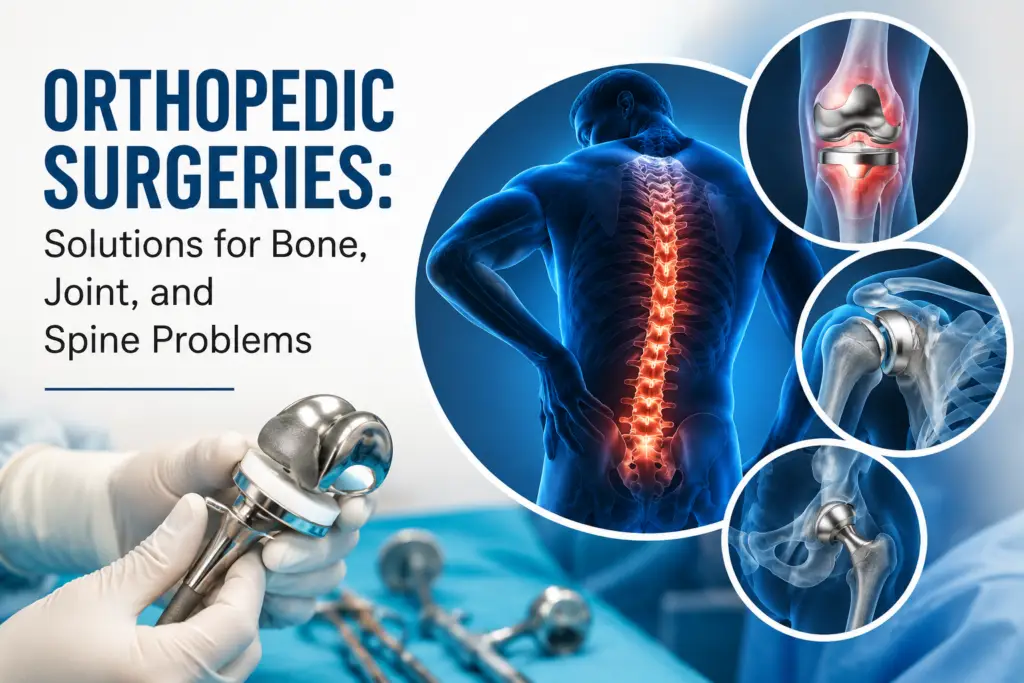
Orthopedic Surgeries problems can significantly affect a person’s quality of life. Whether it is chronic joint pain, a sports injury, arthritis, fractures, or spine disorders, these conditions can make even simple daily activities difficult. Fortunately, advancements in orthopedic surgeries have transformed the way doctors diagnose, treat, and manage musculoskeletal conditions. Modern orthopedic procedures now offer faster recovery, minimally invasive techniques, and long-term relief from pain and mobility issues.
Orthopedic surgery focuses on treating conditions related to bones, joints, ligaments, tendons, muscles, and the spine. From knee replacement surgeries to spinal decompression procedures, orthopedic treatments help patients regain mobility, reduce pain, and return to an active lifestyle.
In this blog, we will explore different types of orthopedic surgeries, their benefits, common conditions treated, recovery process, and why early orthopedic care is essential for maintaining healthy bones and joints.
What Is Orthopedic Surgery?
Orthopedic surgery is a medical specialty dedicated to diagnosing and treating disorders of the musculoskeletal system. This system includes:
- Bones
- Joints
- Ligaments
- Tendons
- Muscles
- Spine
Orthopedic surgeons use both surgical and non-surgical methods to treat injuries and chronic conditions. While medications, physiotherapy, and lifestyle changes may help in many cases, surgery is often recommended when conservative treatments fail to provide relief.
Modern orthopedic surgeries are designed to improve movement, relieve pain, and restore function. Technological advancements such as arthroscopy, robotic-assisted surgeries, and minimally invasive procedures have greatly improved patient outcomes.
Common Conditions That Require Orthopedic Surgery
Orthopedic surgery may be necessary for several conditions affecting bones, joints, and the spine. Some of the most common include:
1. Arthritis
Arthritis is one of the leading causes of joint pain and stiffness. Osteoarthritis and rheumatoid arthritis can damage cartilage, leading to severe pain and limited mobility. In advanced cases, joint replacement surgery may be required.
2. Fractures and Trauma Injuries
Broken bones caused by accidents, falls, or sports injuries often require surgical fixation using plates, screws, or rods to ensure proper healing.
3. Sports Injuries
Athletes and physically active individuals commonly suffer from ligament tears, tendon injuries, and cartilage damage. Procedures like ACL reconstruction and arthroscopy help restore joint stability and function.
4. Spine Disorders
Conditions such as slipped discs, spinal stenosis, scoliosis, and chronic back pain may require spinal surgery if non-surgical treatments fail.
5. Joint Degeneration
Age-related wear and tear can cause degeneration in joints such as the knees, hips, and shoulders, leading to chronic pain and reduced mobility.
6. Congenital Bone Disorders
Certain individuals are born with musculoskeletal abnormalities that may require corrective orthopedic procedures.
Types of Orthopedic Surgeries
Orthopedic surgery includes a wide range of procedures depending on the affected body part and condition.
Knee Replacement Surgery
Knee replacement surgery is one of the most common orthopedic procedures worldwide. It is typically recommended for patients suffering from severe arthritis or knee joint damage.
Procedure
During the surgery, damaged cartilage and bone are removed and replaced with artificial implants made of metal and plastic.
Benefits
- Relief from chronic knee pain
- Improved mobility and flexibility
- Better quality of life
- Long-lasting results
Recovery
Most patients begin walking within a few days after surgery and can resume normal activities within a few weeks with proper physiotherapy.
Hip Replacement Surgery
Hip replacement surgery is performed when the hip joint becomes severely damaged due to arthritis, fractures, or degeneration.
Symptoms That May Require Hip Replacement
- Severe hip pain
- Difficulty walking
- Stiffness in the hip joint
- Reduced range of motion
Advantages
- Significant pain reduction
- Improved movement
- Better posture and balance
- Enhanced daily functioning
Modern hip replacement procedures use minimally invasive techniques, resulting in smaller incisions and faster recovery.
Shoulder Surgery
Shoulder pain can occur due to injuries, arthritis, or rotator cuff tears. Orthopedic shoulder surgery helps restore movement and reduce pain.
Common Shoulder Procedures
- Rotator cuff repair
- Shoulder replacement
- Arthroscopic shoulder surgery
These procedures are often performed using minimally invasive techniques, reducing recovery time and complications.
Arthroscopy Surgery
Arthroscopy is a minimally invasive orthopedic procedure used to diagnose and treat joint problems.
How It Works
A tiny camera called an arthroscope is inserted through a small incision to view the inside of the joint.
Common Arthroscopic Procedures
- Knee arthroscopy
- Shoulder arthroscopy
- Ankle arthroscopy
- Wrist arthroscopy
Benefits of Arthroscopy
- Smaller incisions
- Less pain
- Faster recovery
- Minimal scarring
Arthroscopy is especially beneficial for sports injuries and ligament repairs.
Spine Surgery
Spine problems can severely impact daily life and cause chronic pain, numbness, and weakness.
Common Spine Conditions Treated
- Herniated discs
- Spinal stenosis
- Sciatica
- Scoliosis
- Degenerative disc disease
Types of Spine Surgeries
Spinal Fusion
This procedure joins two or more vertebrae together to stabilize the spine.
Discectomy
A damaged disc pressing on nerves is removed to relieve pain.
Laminectomy
Part of the vertebra is removed to reduce pressure on the spinal cord.
Benefits of Spine Surgery
- Reduced back and neck pain
- Improved mobility
- Better nerve function
- Enhanced quality of life
Advanced minimally invasive spine surgeries now allow quicker recovery and shorter hospital stays.
Fracture Repair Surgery
Severe fractures may require surgical intervention to properly align and stabilize bones.
Common Techniques
- Internal fixation using plates and screws
- Rod insertion
- External fixation devices
Orthopedic trauma surgery ensures bones heal correctly and restores normal function.
ACL Reconstruction Surgery
Anterior Cruciate Ligament (ACL) injuries are common among athletes and active individuals.
Symptoms of ACL Injury
- Knee instability
- Swelling
- Pain while walking
- Difficulty in sports activities
Procedure
The damaged ligament is replaced with a graft from the patient’s body or a donor tissue.
Recovery
Physical therapy plays a crucial role in restoring strength and movement after ACL surgery.
Benefits of Modern Orthopedic Surgery
Orthopedic surgery has evolved significantly over the years. Patients now experience better outcomes due to advanced technology and surgical techniques.
1. Pain Relief
One of the biggest benefits of orthopedic surgery is long-term pain relief, especially for patients suffering from arthritis or chronic injuries.
2. Improved Mobility
Patients can regain movement and perform daily activities more comfortably.
3. Faster Recovery
Minimally invasive surgeries reduce tissue damage and speed up recovery.
4. Better Quality of Life
Patients often return to work, sports, and social activities with improved confidence and comfort.
5. Long-Term Results
Modern implants and surgical methods provide durable and effective outcomes.
Minimally Invasive Orthopedic Surgery
Minimally invasive orthopedic surgery has revolutionized patient care.
Features
- Smaller incisions
- Reduced bleeding
- Less pain
- Shorter hospital stay
- Faster healing
These procedures are commonly used in joint replacements, arthroscopy, and spine surgery.
Robotic-Assisted Orthopedic Surgery
Robotic technology is increasingly being used in orthopedic procedures.
Advantages
- Greater precision
- Better implant placement
- Reduced complications
- Personalized surgical planning
Robotic-assisted knee and hip replacement surgeries are becoming highly popular due to their accuracy and improved outcomes.
Recovery After Orthopedic Surgery
Recovery is a crucial part of successful orthopedic treatment.
Factors Affecting Recovery
- Type of surgery
- Patient’s age and health
- Rehabilitation efforts
- Lifestyle habits
Rehabilitation and Physiotherapy
Physical therapy helps patients regain strength, flexibility, and mobility after surgery.
Common Rehabilitation Goals
- Reduce pain and swelling
- Improve joint movement
- Restore muscle strength
- Prevent complications
Following the doctor’s instructions and attending regular physiotherapy sessions can greatly improve recovery outcomes.
Risks and Complications of Orthopedic Surgery
Like any medical procedure, orthopedic surgery carries certain risks.
Possible Complications
- Infection
- Blood clots
- Nerve injury
- Implant problems
- Delayed healing
However, modern surgical techniques and proper post-operative care have significantly reduced these risks.
How to Prevent Orthopedic Problems
While not all orthopedic conditions can be prevented, maintaining healthy habits can reduce the risk of injuries and joint problems.
Tips for Healthy Bones and Joints
Exercise Regularly
Strength training and stretching improve muscle support and joint flexibility.
Maintain a Healthy Weight
Excess weight puts pressure on joints, especially knees and hips.
Eat a Balanced Diet
Calcium and vitamin D are essential for bone health.
Practice Good Posture
Proper posture reduces stress on the spine and joints.
Avoid Smoking
Smoking can weaken bones and slow healing.
Use Protective Gear
Athletes should use proper equipment to prevent sports injuries.
When Should You Consult an Orthopedic Specialist?
You should seek orthopedic care if you experience:
- Persistent joint or bone pain
- Difficulty walking
- Swelling or stiffness
- Back or neck pain
- Sports injuries
- Limited movement
Early diagnosis and treatment can prevent complications and improve long-term outcomes.p
Future of Orthopedic Surgery
The future of orthopedic care looks promising due to rapid technological advancements.
Emerging Innovations
- 3D-printed implants
- Stem cell therapy
- AI-assisted diagnostics
- Robotic surgeries
- Advanced biomaterials
These innovations aim to improve precision, recovery, and long-term patient outcomes.
Conclusion
Orthopedic surgeries have transformed the treatment of bone, joint, and spine problems. Whether it is knee replacement, hip surgery, arthroscopy, or spine procedures, modern orthopedic care helps patients regain mobility, reduce pain, and improve their quality of life.
With advancements in minimally invasive techniques and robotic-assisted surgeries, patients now benefit from safer procedures, shorter recovery times, and long-lasting results. Early diagnosis, proper treatment, and rehabilitation are essential for achieving the best outcomes.
If you are experiencing chronic joint pain, sports injuries, or spine-related problems, consulting an experienced orthopedic specialist can help you find the right treatment solution and return to a healthy, active lifestyle.
Contact Us – Kamal Hospital
Looking for expert medical care you can trust?
Get in touch with us today to schedule an appointment or speak with our healthcare team.
Kamal Hospital
KA-Block, Kaushambi, Ghaziabad, Uttar Pradesh – 201010
Phone: 0120-4758888, +91 9958586089
Website: www.kamalhospitalncr.com
FAQs About Orthopedic Surgery
Q1. Is orthopedic surgery painful?
Ans. Pain is managed with modern anesthesia and medications. Most patients experience significant pain relief after recovery.
Q2. How long does recovery take?
Ans. Recovery depends on the type of surgery. Minor procedures may heal within weeks, while joint replacements may take several months.
Q3. Can elderly patients undergo orthopedic surgery?
Ans. Yes, many elderly patients successfully undergo joint replacement and spine surgeries with excellent outcomes.
Q4. What is the success rate of orthopedic surgery?
Ans. Most orthopedic procedures have high success rates when performed by experienced surgeons and followed by proper rehabilitation.
Q5. Are minimally invasive surgeries better?
Ans. Minimally invasive procedures often result in less pain, smaller scars, and faster recovery compared to traditional surgeries